
British Museum Pilots On-Chain Archive of Public Domain Works
A two-year pilot will mint provenance-tracked tokens for 30,000 catalogued items, working with a London-based L2 to give scholars and the public a tamper-proof record of cultural heritage.
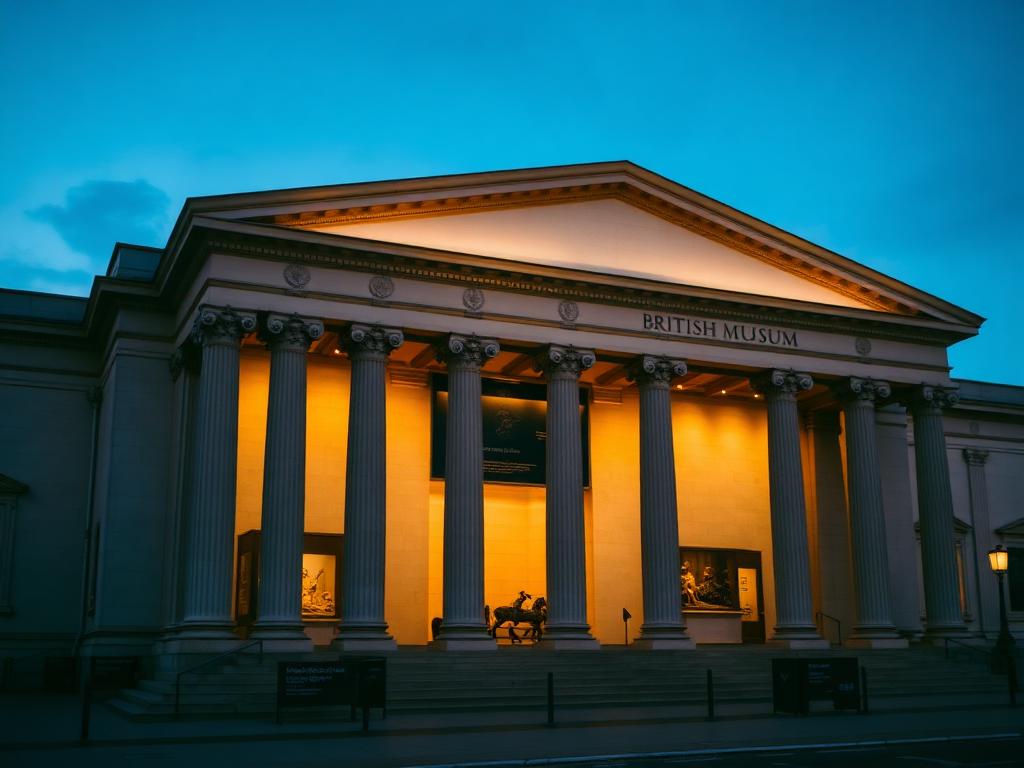
London — The British Museum has confirmed it will mint on-chain provenance records for 30,000 public-domain items from its catalogue as part of a two-year pilot announced on Thursday morning. The project, developed with a London-based Ethereum layer-2 and funded jointly by the museum's digital innovation budget and a private philanthropic grant, is the largest cultural-heritage blockchain initiative ever attempted by a UK national institution.
Crucially, the museum has been careful to draw a hard line: the tokens are not for sale. Each NFT acts as a permanent, publicly verifiable certificate of an object's catalogue entry, conservation history, exhibition record and high-resolution imagery. Ownership of the underlying artefact remains entirely with the museum and the nation.
Why the museum is doing this
Curators have spent more than a decade wrestling with attribution disputes, fragmented digitisation efforts and the slow erosion of provenance records as objects are loaned, restored and re-photographed. An immutable ledger entry — anchored to Ethereum mainnet via the chosen L2's weekly settlement — gives researchers a single source of truth that cannot be quietly edited or lost in a database migration.
The pilot also addresses a growing problem: the unauthorised commercial use of museum imagery in third-party NFT collections. By publishing the museum's own canonical record on-chain first, any future minted derivatives can be transparently traced back to — or distinguished from — the official entry.
What's in the first 30,000
The opening tranche focuses on objects already in the public domain under UK copyright law and already digitised to museum standards. Expect a heavy weighting toward the Department of Coins and Medals (which has a long tradition of detailed cataloguing), Roman Britain, and a curated selection from the Department of Prints and Drawings. Politically sensitive holdings — including the Parthenon Sculptures — are explicitly excluded from the pilot.
Each token will carry a structured metadata schema covering accession number, acquisition date, prior owners where known, conservation interventions, exhibition history, and links to peer-reviewed scholarship. The schema has been published as an open standard and the museum is encouraging other UK institutions — the V&A and Tate among them — to adopt it.
The technology choice
The museum opted for a London-based Ethereum L2 over a permissioned chain after a year-long technical review. Officials cited three factors: open public verifiability, low per-mint costs (estimated at under £0.02 per record after the recent Pectra upgrade), and the L2's UK-domiciled operating company, which simplifies procurement and data-protection compliance.
Reaction and what's next
Industry response has been cautiously enthusiastic. The Museums Association welcomed the provenance focus but reminded members that on-chain records are only as good as the metadata curators put into them. Several academic conservators have asked for a public consultation on how corrections and re-attributions will be handled — the museum has confirmed an amendment protocol will be published before the first batch goes live in July.
If the pilot succeeds, a second phase covering a further 200,000 items is already scoped. For now, the British Museum has done something quietly significant: it has shown that a serious cultural institution can engage with blockchain infrastructure on its own terms, in service of scholarship rather than speculation.
Daily Crypto News UK will publish a full technical breakdown of the metadata schema once it goes live. Subscribe to The Morning Brief for the next update.