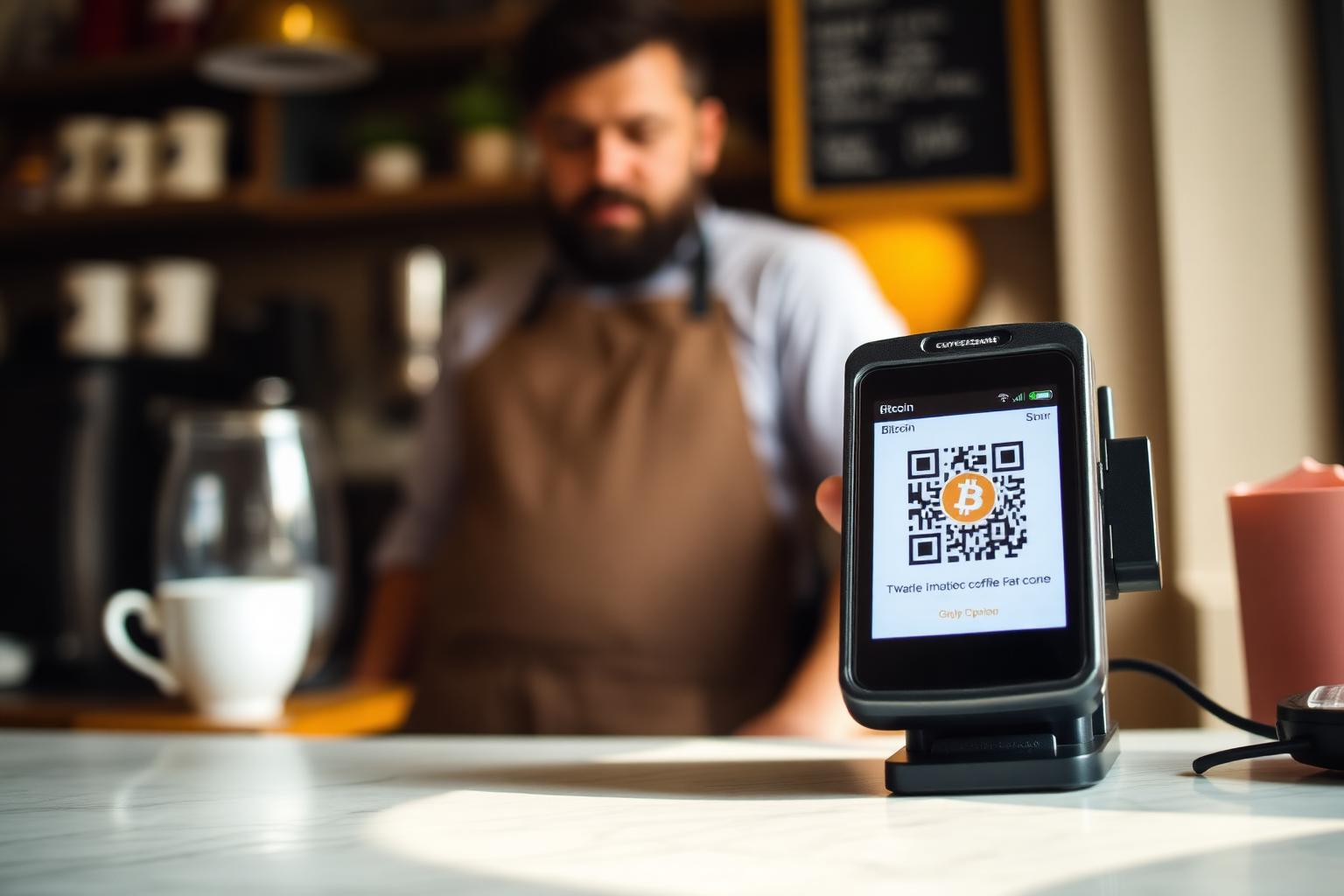
Crypto debit cards make spending bitcoin at Tesco effortless — and every tap is a disposal HMRC can tax and, from this year, see. How CGT applies to crypto spending and how to keep it manageable.
London — A crypto debit card is a small marvel of plumbing: tap at the till, and somewhere between the card terminal and your wallet, your bitcoin becomes sterling and pays for the shopping. Visa and Mastercard rails, ordinary UK shops, no one behind the counter any the wiser.
HMRC, however, is entirely the wiser. Because here's the bit the card marketing never leads with: every single one of those taps is a disposal of a cryptoasset, and disposals are what capital gains tax attaches to. Buy a £3.20 coffee with bitcoin you acquired cheaply, and you have — in the eyes of the tax system — sold an asset at a gain.
HMRC's guidance is blunt about what counts as a disposal: selling crypto for money, exchanging one token for another, and using tokens to pay for goods or services all qualify. The logic is consistent — in each case you've parted with an asset at its market value, and any growth since you acquired it crystallises at that moment.
So a crypto debit card doesn't avoid the tax question; it industrialises it. A card used for daily spending can generate hundreds of disposals a year — each one tiny, each one technically requiring a gain-or-loss calculation against your acquisition cost under HMRC's pooling rules. Nobody does that arithmetic by hand. If you spend from a card, tax software that ingests your transaction history isn't a luxury; it's the only sane way to file.
Possibly none — but you have to do the sums to know. Net gains under the £3,000 annual exempt amount carry no CGT. Above that, gains are taxed at 18% or 24% depending on your income band.
The trap is that small spends add up invisibly. Someone who bought a chunk of bitcoin years ago and runs £800 a month through a crypto card is disposing of nearly £10,000 a year — and if most of that value is gain, they're past the allowance without ever once feeling like they "sold their crypto." The card's convenience is precisely what hides the taxable event.
Losses cut the other way, mind. Spending crypto that's fallen since purchase realises a loss, which offsets gains elsewhere. Same record-keeping, happier arithmetic.
This is the part that changed in 2026. Under the Cryptoasset Reporting Framework, UK crypto platforms must collect and report user and transaction data to HMRC — and the reportable categories include, in some cases, payments made with crypto debit cards, per the gov.uk guidance. First reports covering this calendar year land with HMRC by 31 May 2027.
The era when card spending lived in a blind spot — too small, too scattered, too far from an exchange ledger to notice — is closing. If your card issuer is in scope, your spending pattern is in the data. Filing as though HMRC can't see it is now a bet against a database rather than a bet against attention.
A common workaround is loading the card with stablecoins instead: if a token pegged to the pound or dollar barely moves in value, each spend produces a gain of roughly zero. Sensible — but note the word roughly. Spending a stablecoin is still a disposal that belongs in your records, sterling-pegged coins still fluctuate slightly, and dollar-pegged ones add exchange-rate movement to every calculation. Stablecoin spending shrinks the tax bill, not the paperwork.
Keep it boring. Use one card and export its full transaction history regularly, while the account is open and the data is a click away. Run a crypto tax tool over the year's activity before the self-assessment deadline rather than during it. Prefer stablecoins for routine spending if minimising taxable gains matters to you. And if your situation is genuinely tangled — old coins, big embedded gains, heavy card use — one hour with a crypto-literate accountant costs less than one HMRC enquiry.
Spending crypto in Britain in 2026 is easy, legal and increasingly normal. Just go in knowing the deal: the card turns your wallet into a current account, and HMRC treats every tap as a trade.
Journalism
We use cookies to enhance your experience. By clicking "Accept", you agree to our use of cookies for analytics. See our Privacy Policy.