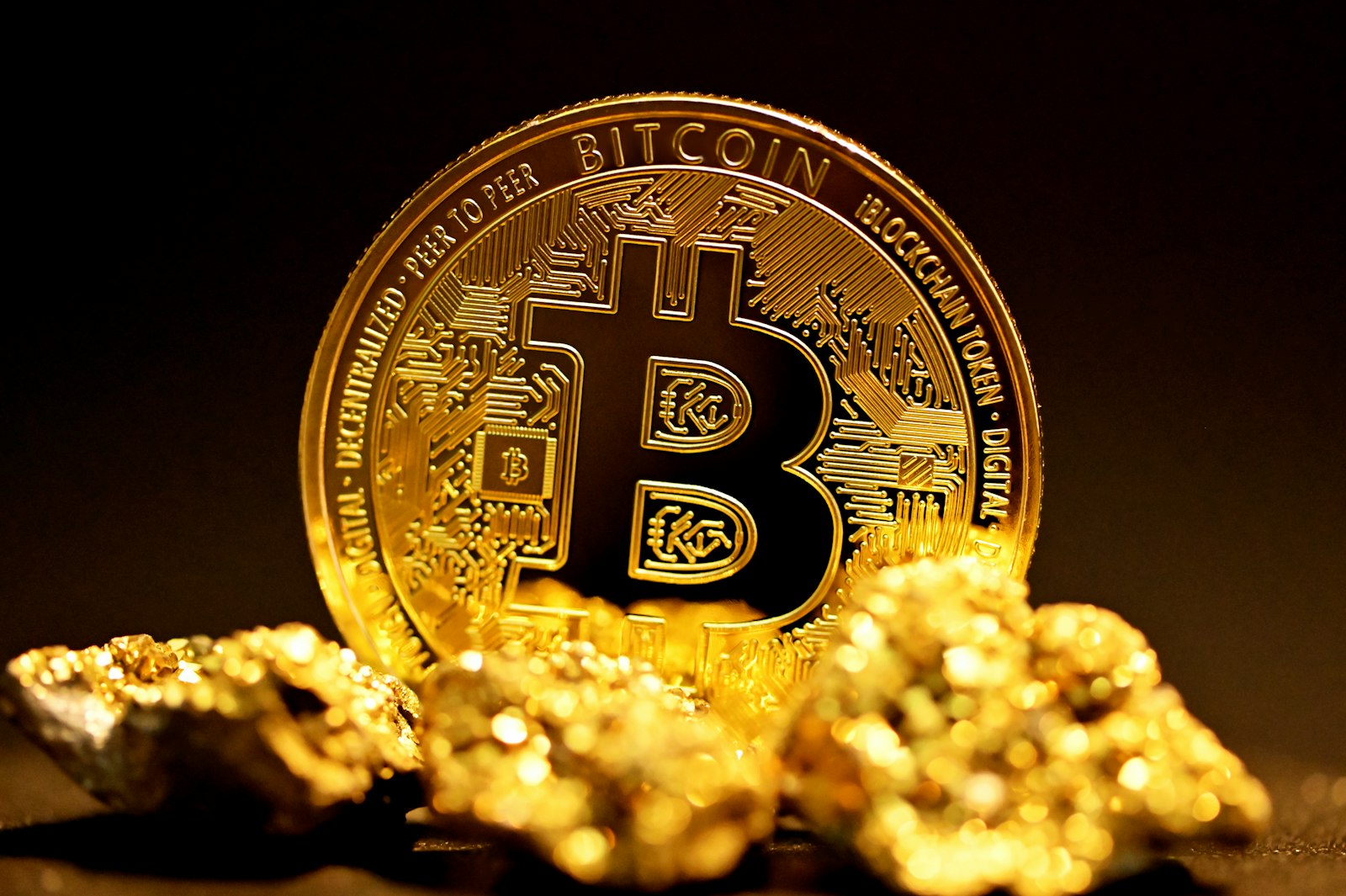
Bitcoin is a digital currency with no bank or government behind it — money that runs on a shared public ledger called the blockchain. Here's what it actually is, how it works, whether it's legal in the UK, and how a beginner buys it safely.
Bitcoin is a form of digital money that no bank, company, or government controls — it runs on a shared public record called the blockchain, maintained by thousands of computers around the world rather than a central authority. You can send it to anyone, anywhere, without asking a bank's permission, and there will only ever be 21 million of it. That fixed supply is why supporters call it "digital gold." It's legal to own and buy in the UK, though it's unregulated as an investment and its price swings hard.
If that sounds abstract, don't worry — most people find Bitcoin clicks once they see what problem it was trying to solve. Let's build it up from there.
Bitcoin is internet money you can hold and send without a middleman. Instead of a bank keeping the record of who owns what, that record — the blockchain — is public and copied across a huge network of computers, so no single party can fake it, freeze it, or print more of it. You own Bitcoin by holding the private keys that control it.
Think of the blockchain as a giant shared spreadsheet that everyone can see but no one can secretly edit. When you send Bitcoin, the network checks you actually have it, records the transfer, and that's that — no bank in the middle. It was created in 2009 by an anonymous figure using the name Satoshi Nakamoto, right after the financial crisis, partly as a reaction to trusting banks with money. Our what is blockchain guide goes deeper on the underlying tech.
Transactions are grouped into "blocks," verified by a global network through a process called mining, and permanently added to the chain. When you send Bitcoin, your transaction is broadcast to the network, bundled with others into a block, and confirmed roughly every ten minutes. Miners — computers competing to process transactions — get rewarded with new Bitcoin for the work, which is also how new coins enter circulation.
That mining reward halves roughly every four years in an event called the halving, which steadily slows new supply until the 21-millionth coin is mined (projected around 2140). We cover the next one in our Bitcoin halving 2028 guide. The key takeaways for a beginner: no one can create extra Bitcoin out of thin air, transactions are irreversible once confirmed, and there's no customer-service line to reverse a mistake. That last point matters — send it to the wrong address and it's gone.
Yes. Buying, holding, and selling Bitcoin is completely legal in the UK — it's just not regulated the way a savings account or an ISA is. The FCA oversees crypto firms for money-laundering purposes and regulates how crypto can be advertised, but Bitcoin itself isn't backed by any protection scheme. If it crashes or you lose your keys, there's no FSCS compensation.
That's the trade-off British beginners need to understand: legal, but buyer-beware. Gains are also taxable — selling, swapping, or spending Bitcoin is a disposal for capital gains tax, with an annual tax-free allowance of £3,000 for 2026. Our is crypto legal in the UK guide and do you pay tax on crypto guide cover the detail.
Open an account with an FCA-registered exchange, verify your identity, deposit pounds, and buy. The safe, simple route for a first-timer:
My honest advice for beginners: start small, only with money you can afford to lose entirely, and learn the security basics before you buy a lot. The technology is fascinating; the volatility is real.
Do I have to buy a whole Bitcoin? No. Bitcoin is divisible to eight decimal places, so you can buy any small amount — £10 or £20 worth is fine. The smallest unit is a "satoshi," one hundred-millionth of a Bitcoin. You'll simply own a fraction of a coin.
Who controls Bitcoin? No one. Bitcoin runs on a decentralised network of computers worldwide, with rules enforced by software rather than any company or government. Changes require broad agreement across the network, which is why Bitcoin's core rules — like the 21 million supply cap — rarely change.
Is Bitcoin safe? The network itself has never been hacked, but Bitcoin as an investment is volatile and unregulated, and individuals lose funds to scams, lost keys, and exchange failures. It's legal to own but carries no FSCS protection. Only invest what you can afford to lose.
What gives Bitcoin its value? Supply and demand, mainly. Its capped supply of 21 million and growing acceptance as "digital gold" drive demand, while its price is set by what buyers will pay. It has no central backer, so its value rests on adoption and belief rather than any government guarantee.
Can Bitcoin be converted back to pounds? Yes. You sell it on an exchange and withdraw sterling to your bank account. Selling is a taxable disposal for capital gains, and gains above the £3,000 annual allowance may be taxable. Our cash out crypto guide covers the steps.
If you're curious, the best way to understand Bitcoin is to buy a small amount — £20 or so — on an FCA-registered exchange and watch how it works, rather than reading about it forever. Learn to secure it, understand that the price will move sharply, and never invest money you can't afford to lose. This isn't financial advice; it's a starting point. From here, our how to buy Bitcoin guide takes you through your first purchase step by step.
Journalism
We use cookies to enhance your experience. By clicking "Accept", you agree to our use of cookies for analytics. See our Privacy Policy.