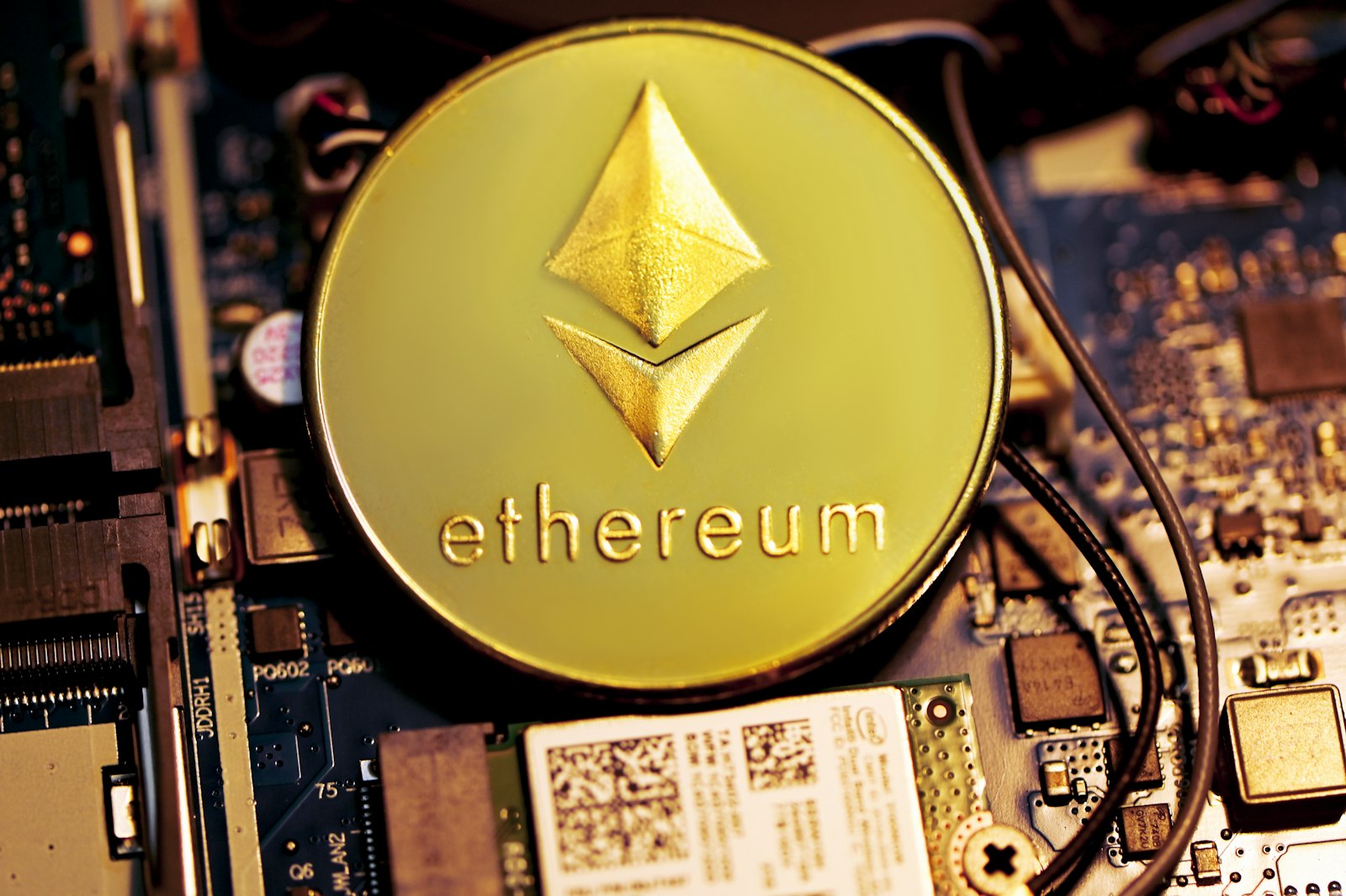
Ethereum is a global computer that runs apps without a company behind them, powered by its currency Ether (ETH). It's what most of DeFi, NFTs, and stablecoins are built on. Here's what Ethereum is, how it differs from Bitcoin, and how UK beginners get started.
Ethereum is a decentralised platform — think of it as a global computer no single company owns — that lets developers build apps which run exactly as programmed, without a bank, landlord, or middleman in the loop. Its built-in currency is Ether (ETH), which you use to pay for actions on the network. If Bitcoin is digital gold, Ethereum is closer to a digital economy: most stablecoins, DeFi lending, and NFTs are built on it. It's legal to own in the UK, unregulated as an investment, and its price is volatile.
The idea that trips people up is that Ethereum isn't just a coin — it's the thing thousands of other crypto projects are built on top of. Once that lands, a lot of crypto starts making sense.
Ethereum is a worldwide network that runs "smart contracts" — small programs that automatically do what they're coded to do. Instead of a company running an app on its own servers, the app runs across Ethereum's global network, so it can't easily be shut down, censored, or altered. Ether (ETH) is the fuel you spend to use it.
A smart contract is just an agreement written in code: "if X happens, do Y," executed automatically with no one able to renege. That's the breakthrough. It means you can build things like lending platforms, marketplaces, and currencies that run themselves. Ethereum launched in 2015, created by a team including Vitalik Buterin, and has become the base layer for most of what people mean by "crypto" beyond Bitcoin. Our what is DeFi guide shows what gets built on it.
Bitcoin is designed to be money; Ethereum is designed to be a platform for applications. Bitcoin does one thing brilliantly — store and transfer value with a fixed 21 million supply. Ethereum is programmable, so developers build all sorts of apps on it, and ETH's supply isn't fixed in the same hard-capped way, though network upgrades have made it roughly flat or even deflationary at times.
| Feature | Bitcoin | Ethereum |
|---|---|---|
| Main purpose | Digital money / store of value | Platform for apps (smart contracts) |
| Currency | BTC | ETH |
| Supply | Capped at 21 million | No fixed cap (but supply-managed) |
| Best known for | "Digital gold" | DeFi, NFTs, stablecoins |
| Transactions | ~10 min blocks | Faster, programmable |
Neither is "better" — they do different jobs. Many UK investors hold both. Our Bitcoin vs Ethereum guide compares them head to head for beginners.
Ethereum secures itself through "staking" rather than mining — people lock up ETH to help run the network and earn rewards. In 2022 Ethereum moved from energy-hungry mining (proof of work) to proof of stake, cutting its energy use by over 99%. Now, instead of miners, "validators" put up ETH as a stake; if they validate honestly they earn rewards, and if they cheat they lose part of their stake.
For a beginner, two practical implications follow. First, you can earn a yield by staking ETH — but in the UK those rewards are taxable, as our Ethereum staking economy and tax guide explains. Second, Ethereum keeps upgrading; ongoing improvements aim to make it faster and cheaper, which we track in pieces like our Fusaka upgrade guide. "Gas fees" — the cost of using Ethereum — are covered in our gas fees guide.
Buy ETH on an FCA-registered exchange, then either hold it, stake it, or use it in apps. The starter path:
Full walkthrough in our how to buy Ethereum guide. My take: Ethereum is more useful but more complex than Bitcoin, so understand what you're doing before venturing into DeFi — that's where beginners get burned. And remember, disposals are taxable.
What is the difference between Ethereum and Ether? Ethereum is the network or platform; Ether (ETH) is the cryptocurrency used to pay for actions on it. People often say "Ethereum" to mean the coin, but strictly, Ethereum is the system and Ether is the token that powers it.
What are smart contracts? Smart contracts are programs stored on Ethereum that run automatically when their conditions are met — "if X, then Y" — with no middleman able to interfere. They power everything from DeFi lending to NFT marketplaces, executing agreements in code rather than through a company or lawyer.
Can I make money staking Ethereum? You can earn staking rewards by helping secure the network, but it carries risks and the rewards are taxable income in the UK. Returns vary and your ETH can be locked up. Our Ethereum staking and tax guide covers the details.
Why are Ethereum fees sometimes high? Fees ("gas") rise when the network is busy, because users compete to have their transactions processed. Upgrades and layer-2 networks aim to reduce them. Our gas fees guide explains how they work and how to pay less.
Is Ethereum a good investment? That depends on your goals and risk tolerance — Ethereum is volatile, unregulated, and carries no FSCS protection, so only invest what you can afford to lose. It has strong adoption as the base for DeFi and stablecoins, but nobody can promise returns. This isn't financial advice.
If Ethereum interests you, buy a small amount of ETH on an FCA-registered exchange and get comfortable with how it moves before exploring staking or DeFi, which add risk and complexity. Understand that ETH is volatile and unregulated, keep records for tax, and never invest money you can't afford to lose. From here, our how to buy Ethereum guide covers your first purchase step by step.
Journalism
We use cookies to enhance your experience. By clicking "Accept", you agree to our use of cookies for analytics. See our Privacy Policy.